Total: Rs. 0.00
Taxes and shipping calculated at checkout

Cast Iron Tawa vs Non-Stick Tawa: Which One is Right for Your Kitchen?
Choosing the right tawa is one of the most important decisions for anyone who enjoys cooking. Whether you're preparing crispy dosas, fluffy rotis, golden parathas, or delicious pancakes, the type of tawa you use can make a noticeable difference in both cooking performance and taste. Two of the most popular options available today are cast iron tawas and non-stick tawas. While both serve the same purpose, they offer different advantages depending on your cooking habits, maintenance preferences, and lifestyle.
At Kitchen Affordables, we believe the best cookware is the one that suits your everyday needs. This guide compares cast iron and non-stick tawas to help you make the right choice for your kitchen.
Understanding the Difference
Although both tawas are designed for flat cooking, they differ in construction, cooking style, durability, and maintenance. Cast iron is known for its strength and heat retention, while non-stick cookware is appreciated for its convenience and easy cleaning.
The right choice depends on what you cook most often and how much time you're willing to spend maintaining your cookware.
What is a Cast Iron Tawa?
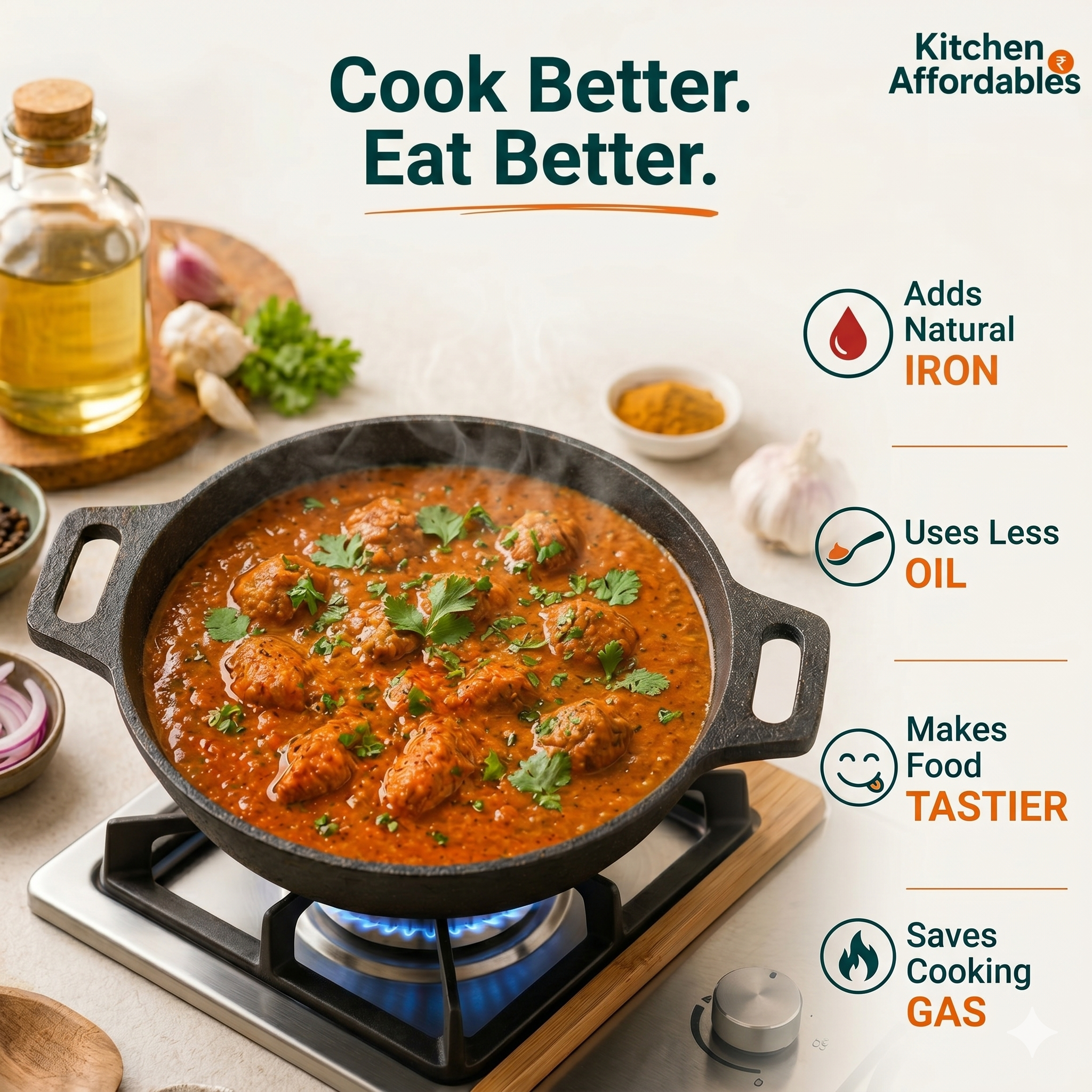
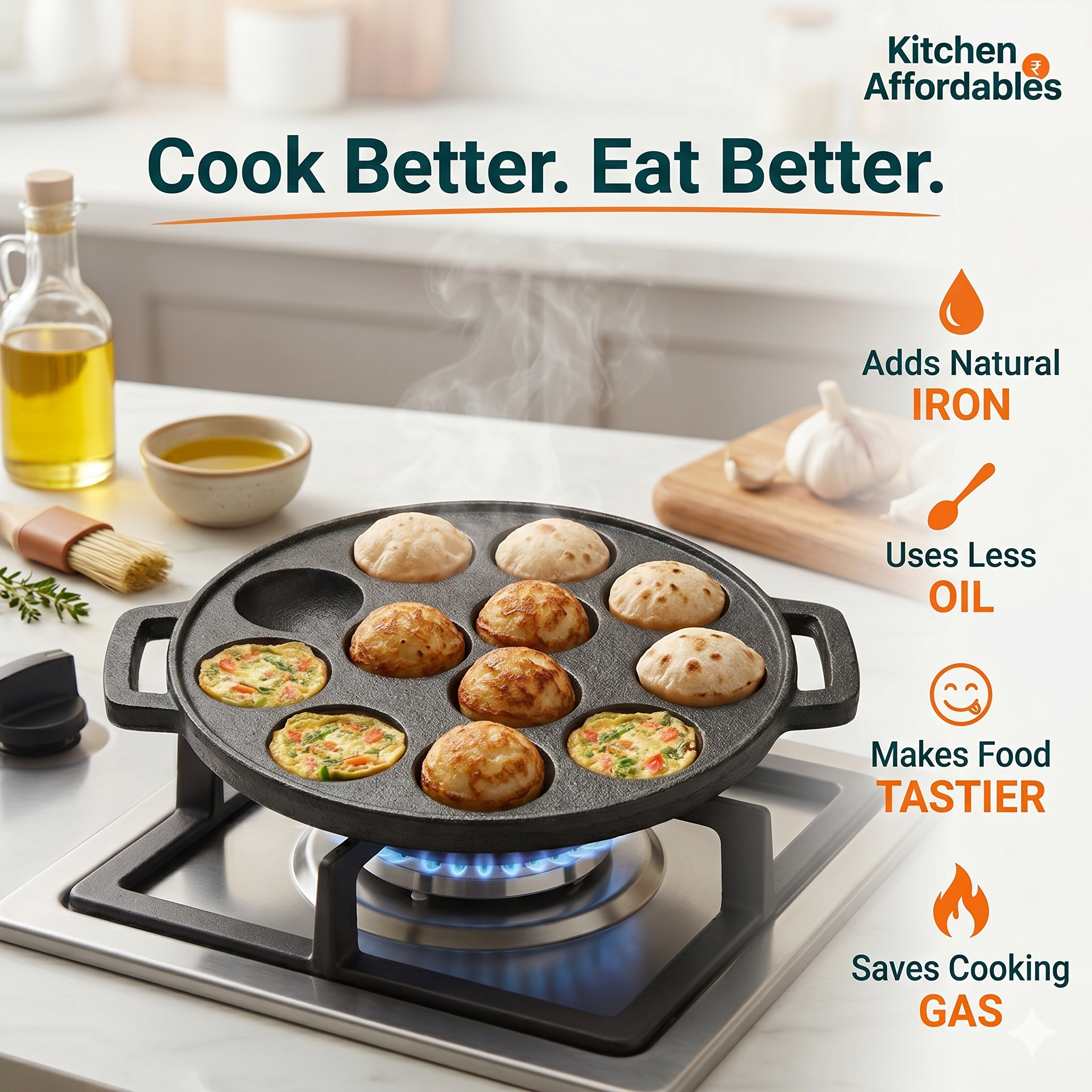
A cast iron tawa is made from solid iron and is known for its exceptional durability. With regular seasoning, it develops a natural cooking surface that improves over time. Many home cooks and professional chefs prefer cast iron because it provides consistent heat and enhances the flavor of food.
Unlike coated cookware, cast iron becomes better with age when maintained properly, making it a long-term investment for every kitchen.
Benefits of Cast Iron Tawa
Excellent heat retention
Even heat distribution
Naturally develops a non-stick surface with seasoning
Extremely durable
Ideal for high-temperature cooking
Perfect for traditional Indian recipes
Suitable for everyday use
Long-lasting performance
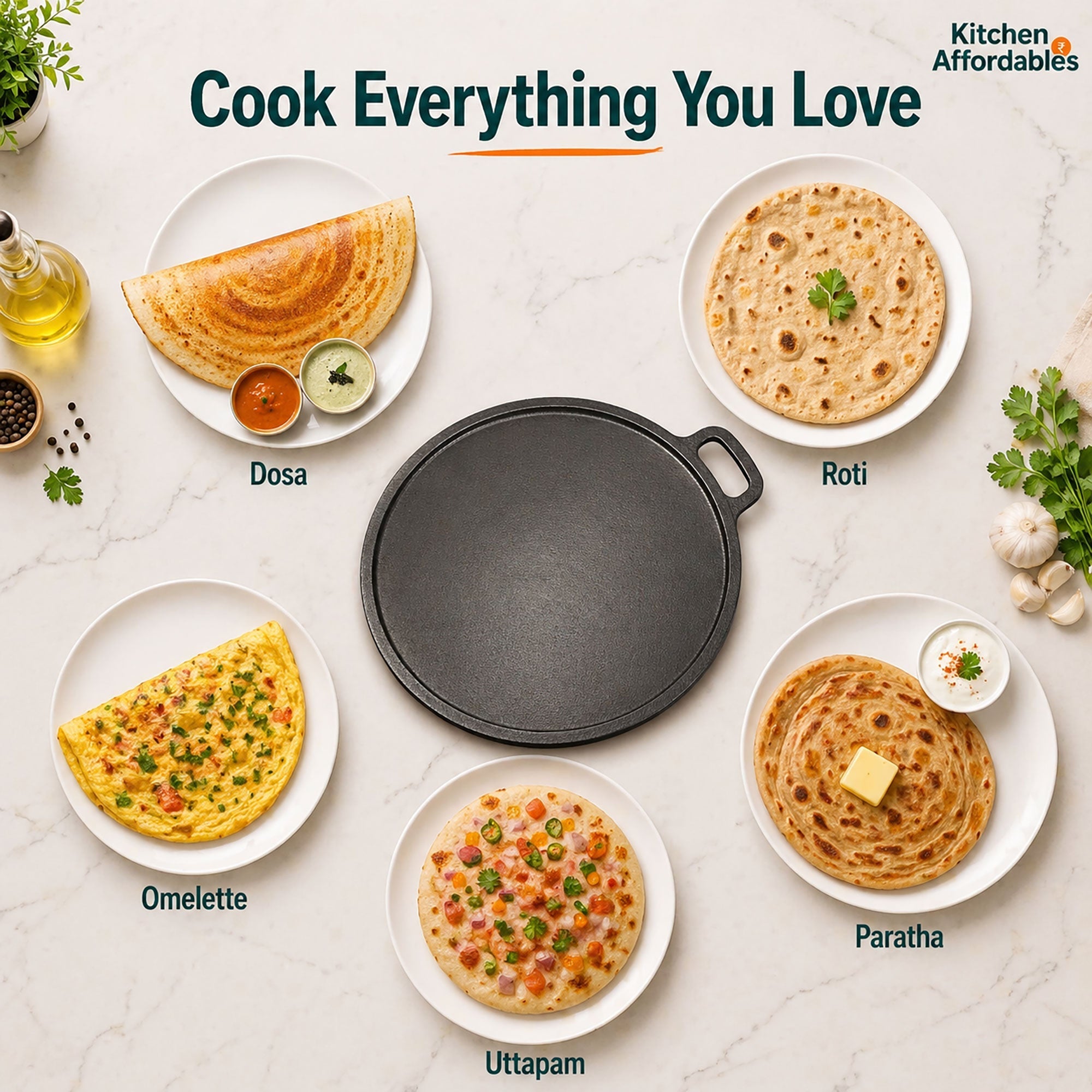
Best Foods to Cook on a Cast Iron Tawa
Plain Dosa
Masala Dosa
Chapati
Roti
Paratha
Thepla
Uttapam
Grilled Vegetables
Paneer
Toasted Sandwiches
Its ability to maintain consistent temperatures helps achieve crisp textures and rich flavors.
Cast Iron Tawa
Superior heat retention
Excellent durability
Requires seasoning
Heavier construction
Long lifespan
Ideal for traditional cooking
Both options perform well, but your cooking style should determine which one fits your kitchen.
Which Tawa is Better for Dosas?
If your goal is achieving restaurant-style crispy dosas with beautiful browning, a properly seasoned cast iron tawa is an excellent choice. It maintains consistent heat and develops better cooking performance over time.
If convenience and easy cleaning are your priorities, a premium non-stick tawa also delivers excellent results while requiring very little oil.
Which Tawa is Better for Rotis and Parathas?
Cast iron tawas are often preferred for rotis and parathas because they provide steady heat that cooks bread evenly while creating attractive golden spots.
Non-stick tawas also perform well, particularly for households looking for lightweight cookware that is easy to maintain.
Maintenance Comparison
Proper maintenance extends the life of any cookware.
Cast Iron Care
Season regularly
Dry immediately after washing
Store in a dry place
Avoid soaking in water
Apply a light coating of oil after cleaning
Non-Stick Care
Use wooden or silicone utensils
Wash with a soft sponge
Following these simple care routines ensures years of dependable performance.
How to Choose the Right Tawa for Your Kitchen
Before making your purchase, consider your cooking habits, family size, and maintenance preferences.
Choose a Cast Iron Tawa if you:
Frequently cook dosas and parathas
Prefer traditional cookware
Want exceptional durability
Don't mind regular seasoning
Enjoy high-temperature cooking
Choose a Non-Stick Tawa if you:
Prefer quick everyday cooking
Want easy cleaning
Common Mistakes to Avoid
Many people unintentionally reduce the lifespan of their cookware through improper use.
Avoid:
Using extremely high heat unnecessarily
Washing hot cookware immediately
Using metal utensils on non-stick surfaces
Leaving cookware wet after cleaning
Stacking cookware without protection
Ignoring maintenance instructions
Simple care habits can significantly improve the performance and longevity of your cookware.
Why Buy Your Tawa from Kitchen Affordables?
Kitchen Affordables offers carefully selected cookware designed for modern kitchens. Every product is chosen for its quality, durability, and practical design to ensure dependable performance every day.
Why Customers Trust Us
Premium Quality Cookware
Food-Safe Materials
Affordable Prices
Durable Construction
Stylish Designs
Fast Delivery Across India
Secure Payments
Easy Returns
Dedicated Customer Support
Products Built for Everyday Cooking
We believe quality cookware should be accessible to every home without compromising on performance or value.
Final Thoughts
Both cast iron and non-stick tawas are excellent additions to any kitchen, and each serves different cooking needs. If you value durability, authentic cooking results, and long-term performance, cast iron is an outstanding investment. If convenience, quick cleaning, and low-oil cooking are your priorities, a premium non-stick tawa is an ideal choice.
No matter which option you choose, investing in a high-quality tawa will enhance your cooking experience and help you prepare delicious meals with confidence. At Kitchen Affordables, we are committed to bringing you cookware that combines quality, affordability, and everyday performance, helping every home chef cook with ease and confidence.